
Moving to another country means starting from scratch. In September 2022 we settled in Porto with the excitement — and the vertigo — that accompanies any new chapter. We bought a home and, like so many people arriving in Portugal, we needed to carry out some minor renovations.
What was supposed to be a simple bathroom renovation ended up becoming an experience that tested our patience, our finances and, ultimately, our trust in the system.
From a recommendation to a nightmare
We hired Paulo Correia based on a recommendation. The initial quote seemed reasonable and the project, in theory, did not appear complex. However, within a few weeks, constant changes in cost began to arise, along with alleged structural problems that increased the price and an execution that became increasingly questionable.
Tensions escalated. The explanations did not add up. Neither did the financial demands. The situation reached the point where we had to call the police to have him leave our home. That scene — with threats, tension and police intervention to prevent the conflict from escalating — marked the abrupt end of that professional relationship.
But the most difficult part was yet to begin.
Reporting in Portugal: The institutional path that leads nowhere
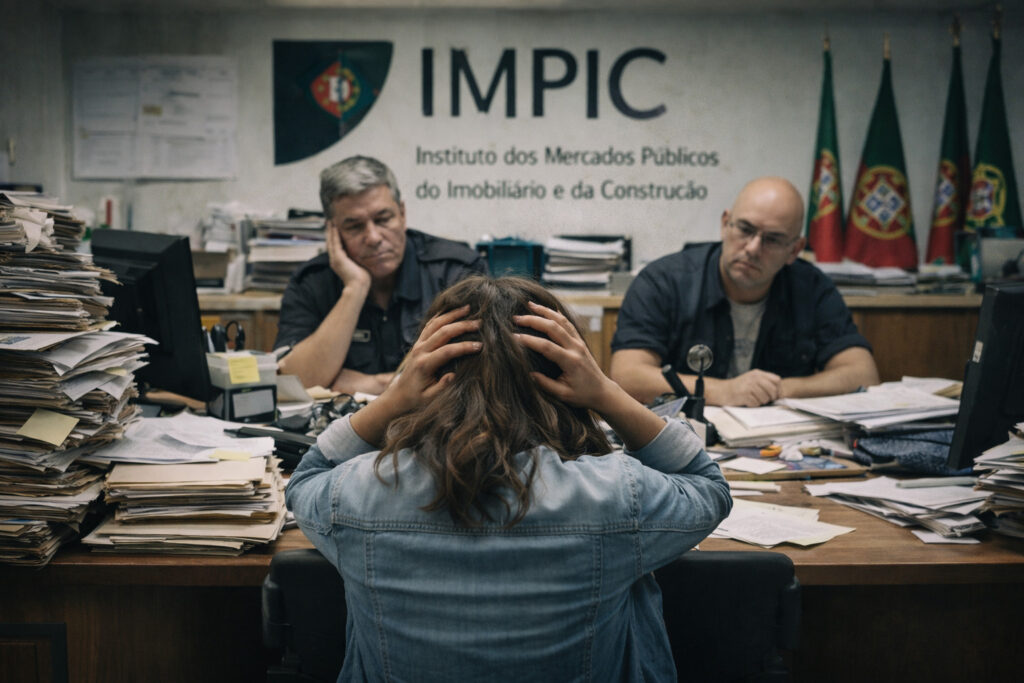
After what happened, we decided to act through legal channels. We filed complaints with the Autoridade Tributária and with IMPIC — the Instituto dos Mercados Públicos, do Imobiliário e da Construção — the public body responsible for supervising and regulating the construction sector in Portugal.
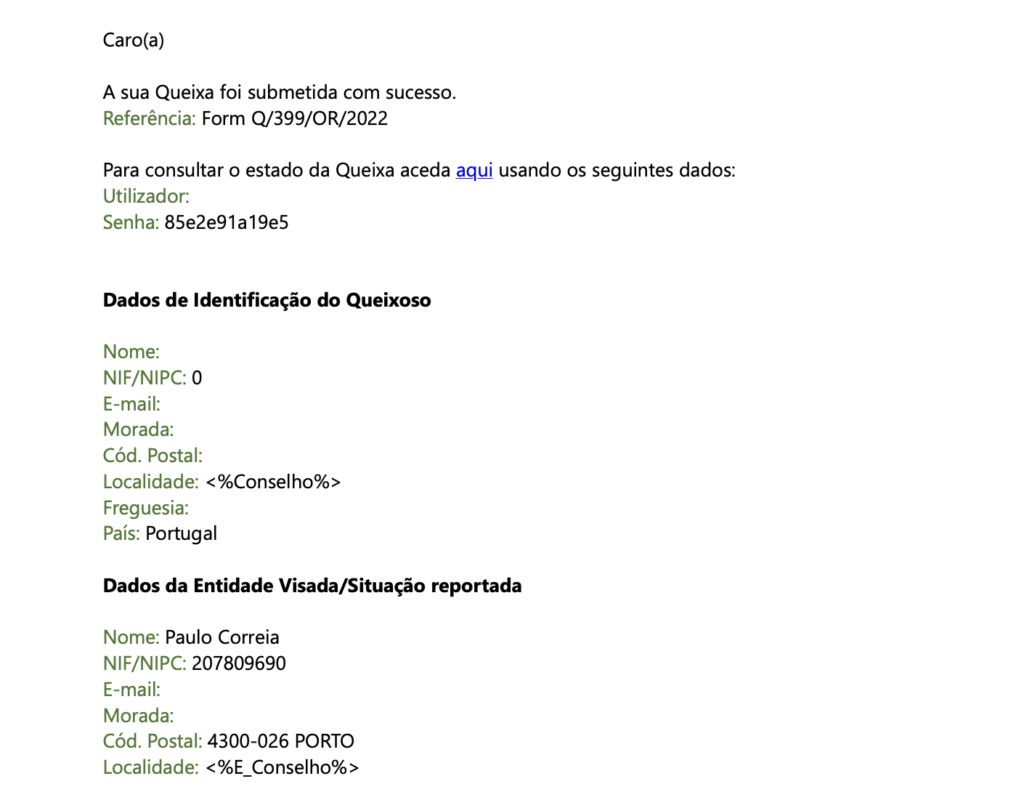
The complaint filed with IMPIC was formally registered in October 2022. We submitted documentation, evidence and all the necessary elements to ensure that the conduct of the professional working illegally as a builder would be investigated.
In parallel, the Tax Authority questioned us and received all available information. Among the documentation obtained was a surprising fact: records showed that the professional had not declared income since 1997. Nevertheless, the procedure was closed on the grounds that the financial amount involved did not justify further action.
The Tax Authority refused to investigate everything this individual had earned since 1997, arguing that the amount I had paid him (almost 4,000 euros) was too small.
This is something unthinkable in any other country in the world.
Three years later: The response from IMPIC
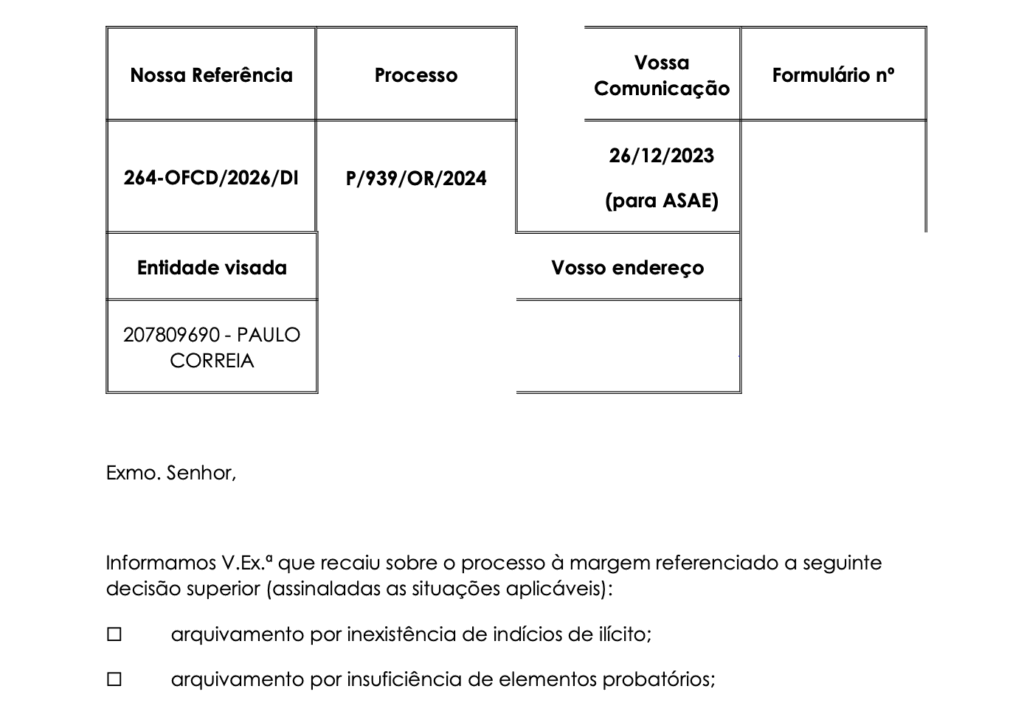
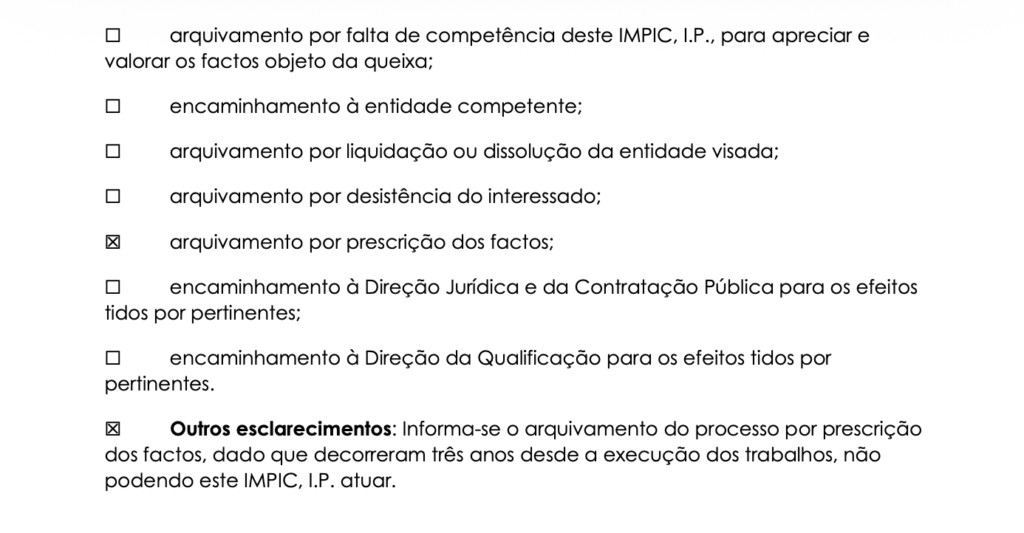
In February 2026, the notification arrived. The case was closed due to statute of limitations. The authority explained that more than three years had passed since the execution of the works and that, for this reason, they could no longer act.
It is difficult to describe the mixture of disbelief and frustration that comes from reading such a resolution when the complaint was filed within the legal deadline.
It was not due to lack of evidence.
It was not due to absence of indications.
It was not due to lack of jurisdiction.
When the system fails in its essential function
The statute of limitations is a legitimate legal institution. It exists to guarantee legal certainty and avoid indefinite proceedings. But here the issue is different.
The citizen acted within the deadline. The complaint was filed in October 2022. All formal requirements were fulfilled. Evidence was provided.
The administration, however, took more than three years to issue a decision. And the result was that administrative inactivity neutralized the possibility of any sanction.
In practical terms, the passage of time — managed by the administration itself — ultimately functioned as a protective shield for the person who had been reported.
The implicit message is deeply problematic: if the procedure is delayed long enough, the consequence disappears.
An issue that goes beyond an individual case
This is not just about our experience. It is about how the system functions when a consumer reports irregularities in the construction sector in Portugal or in any other field.
Portugal should be a European Union country with a solid legal framework. Its institutions, in theory, guarantee legality, oversight and consumer protection. However, when a procedure is closed due to the statute of limitations after years of administrative inactivity, we realize that reality is different.
What real incentive exists to comply with the law if the probability of an effective consequence is null?
As foreign residents who have decided to build our lives in Portugal, this experience leaves an uncomfortable reflection.
Because when the Tax Authority closes a case due to a “small amount” and the regulatory body closes another due to administrative inactivity, the feeling is not one of protection, but of abandonment.
Institutional trust and the conduct of IMPIC
Trust in institutions is an intangible but fundamental asset. And that is precisely why what occurred in this case is so serious.
The conduct of IMPIC is, quite simply, a disgrace.
It cannot be that when the citizen — in this case, the victim of irregular conduct in the construction sector — has strictly complied with the law, has filed the complaint within the legal deadline, has provided all requested evidence and has cooperated whenever information was required, the final outcome is a case closed due to the statute of limitations derived from the authority’s own administrative inactivity.
When IMPIC takes more than three years to process a case and ultimately closes it due to the statute of limitations, we are facing an institutional failure that transfers the consequences of administrative inefficiency to the complainant.
And this amounts to a form of revictimization. Because not only does one suffer the initial harm derived from the irregular conduct of the fraudster, but also the sense of abandonment by the public body responsible for supervising the sector.
It is a situation difficult to understand in a European Union member state, where effective protection of rights and good administration should be operational principles, not merely declarative ones.
Reporting crimes is useless.
It is not that institutions deliberately promote illegality, but their lack of effective action ultimately generates precisely that effect. Through action or omission, they appear to facilitate that those who operate outside the law continue doing so with ease, while the citizen remains unprotected and completely abandoned.
More articles about life in Portugal: