
Hi there,
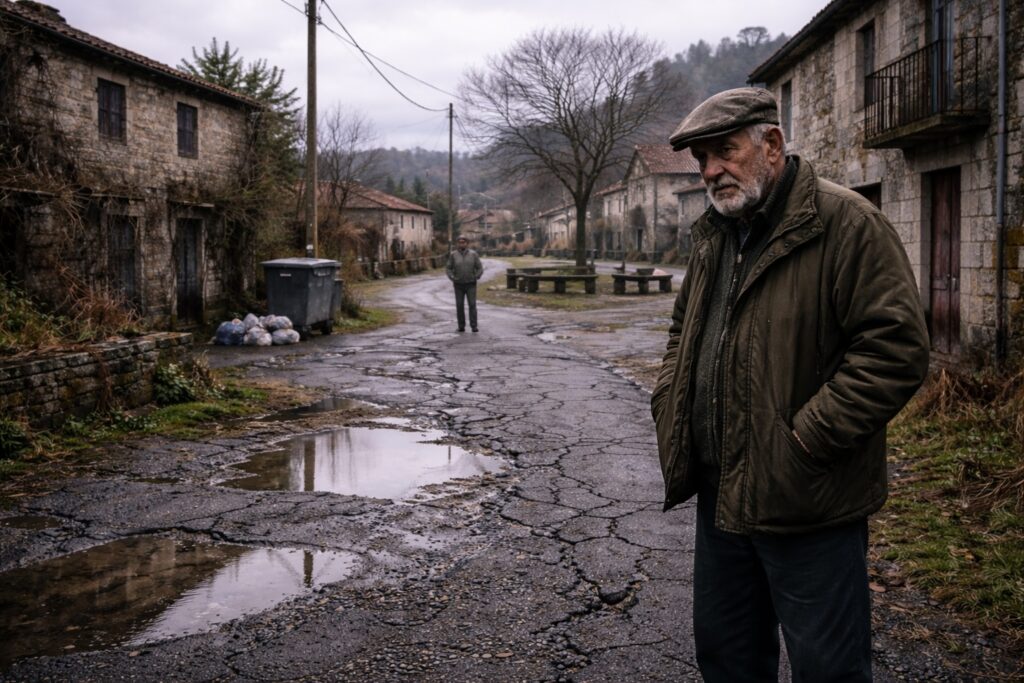
Today I continue telling you how we have kept filing complaints with the Cenlle City Council to improve the conditions of the village where we have our house.
Here is the beginning of this story:
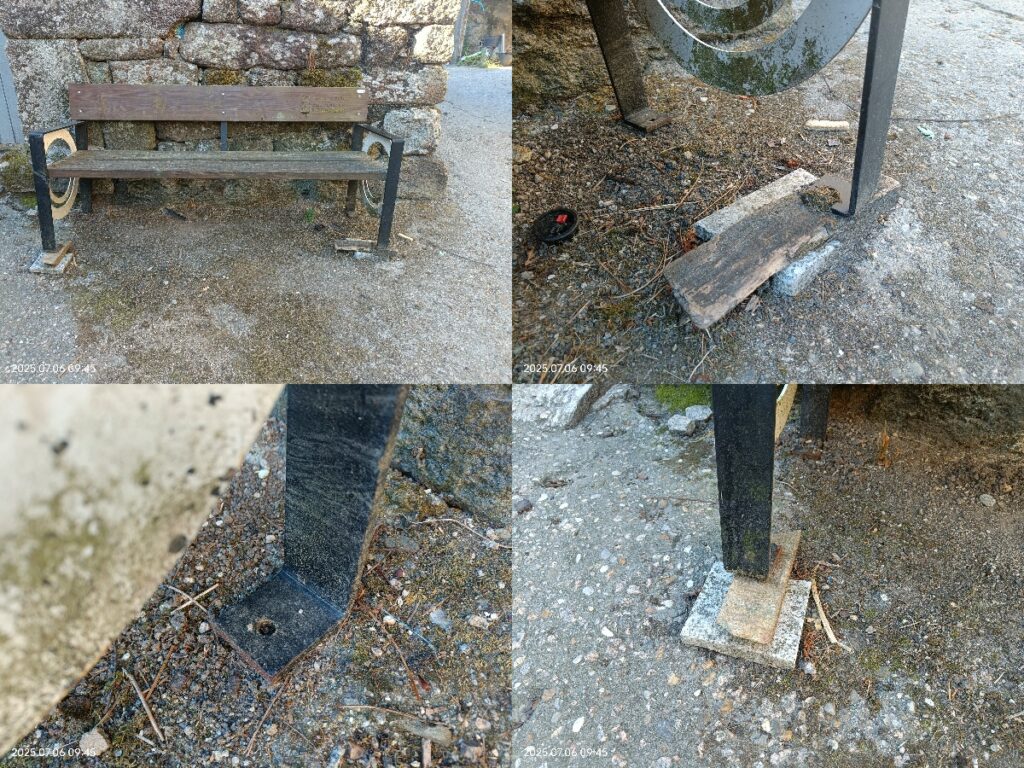
The latest episode was almost comical, if it weren’t dangerous: a poorly placed public bench, unstable, resting on stones instead of being properly anchored to the ground. When you sit down, the bench moves and tilts. Imagine what that could mean for an elderly person. We reported it with photos and a formal complaint to the Diputación of Ourense, requesting not only that the bench be fixed, but that all the urban furniture in the village be reviewed.
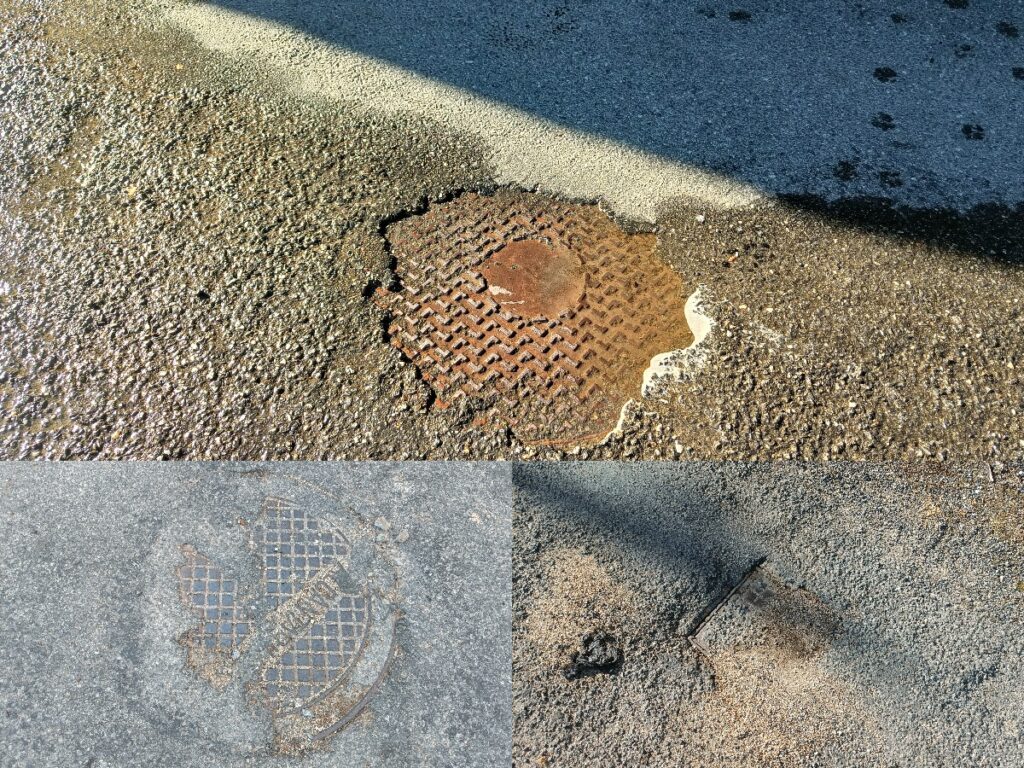
Sewer drains covered by asphalt. They can no longer even be seen or opened. That means that if there is a blockage, a leak, or any problem in the sanitation system, it cannot be accessed for repair.
This is about safety, public health, and basic rights. It is about small villages also deserving attention. And above all, it is about not normalizing what is not right.
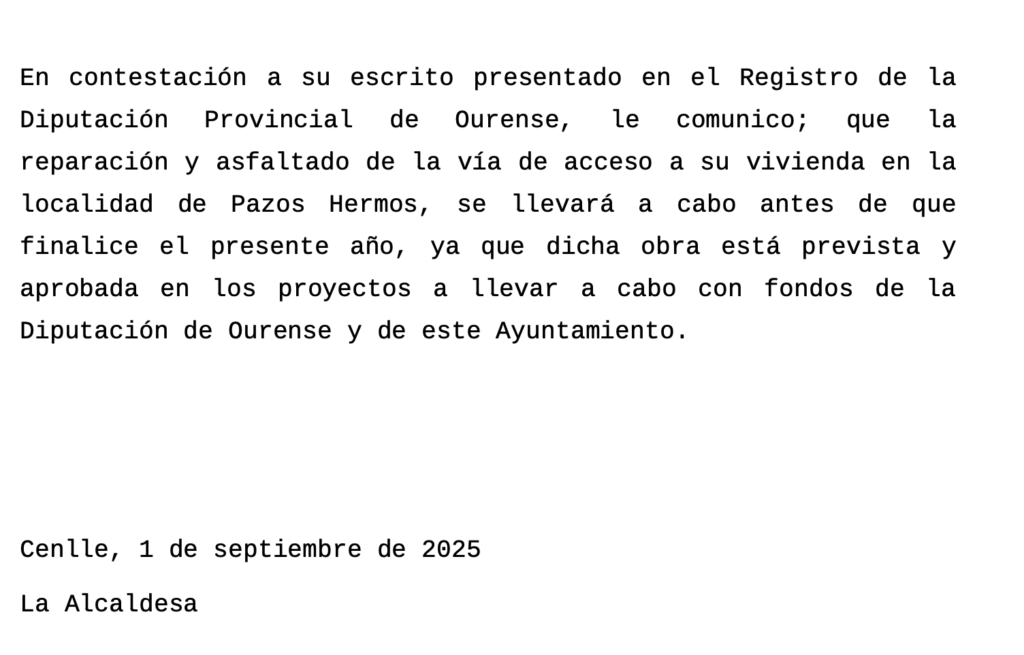
At the beginning of September, we received a response regarding the complaint about the paving, saying that it was already planned to repair the streets before the end of the year.
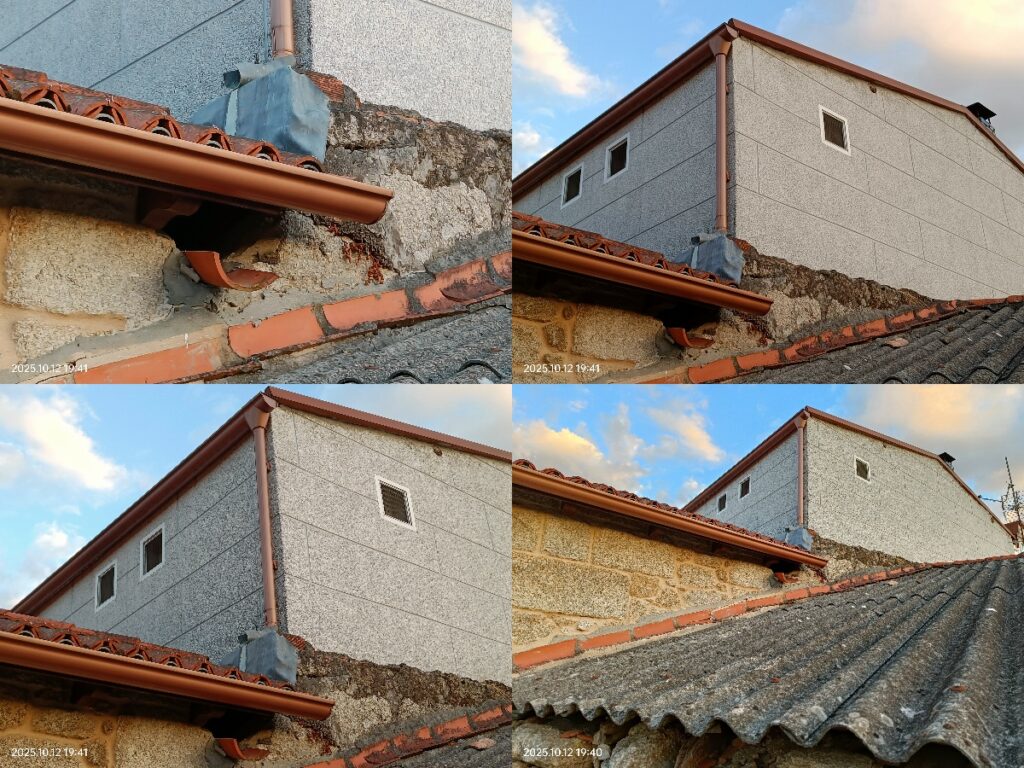
In mid-October I filed a new complaint with the Cenlle City Council, this time expanding on the one I had already submitted in May regarding the discharge of rainwater onto my property. At that time, I had reported that a neighboring house, located just behind mine, lacks a gutter on the roof, causing all the rainwater to fall directly onto my terrace, with the resulting consequences: dampness, dirt, and risk of structural deterioration.
However, I have since discovered something even more serious. A second house, also located next to mine, does have a gutter, but it discharges illegally onto the roof of the first one—the one without a gutter. This means that the rainwater from two different roofs ends up falling directly onto my terrace.
Given this situation, which has gone unanswered by the City Council for months, I once again contacted the Provincial Council of Ourense to ask it to intervene actively as an intermediary.
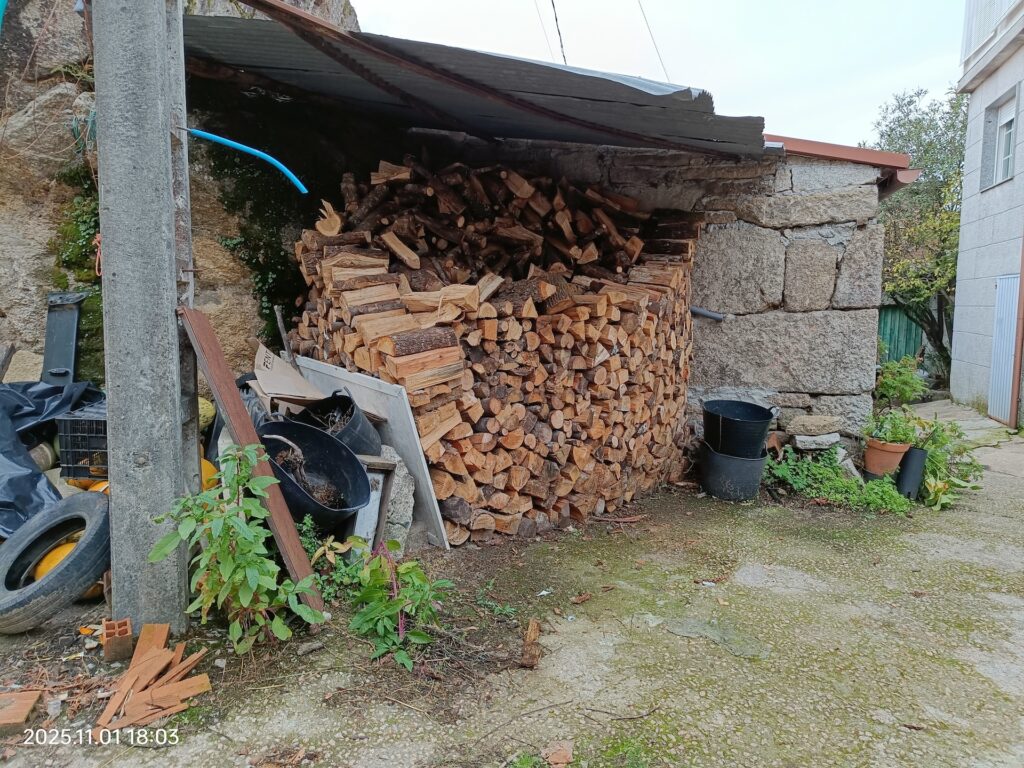
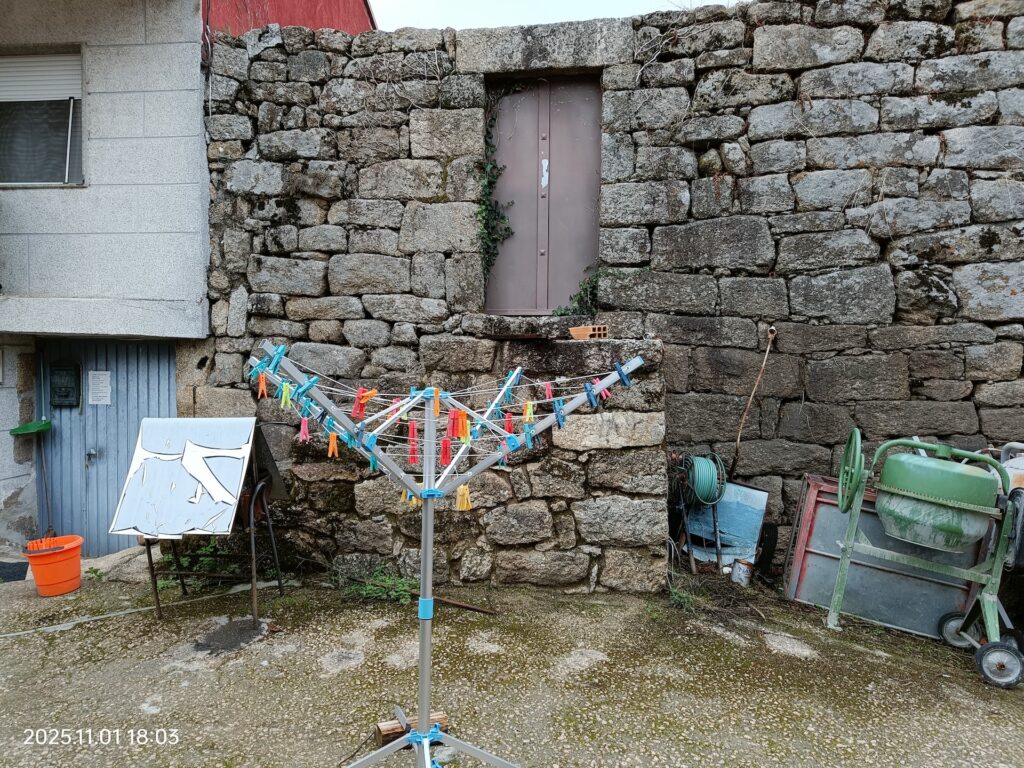
There is a small square where several homes converge, a space that should be public and shared, but which in practice has become a kind of private courtyard. There you can see clotheslines, barbecues, piles of firewood, construction materials, cement mixers, and countless personal objects placed as if it were an extension of the houses. A surreal situation.
What is most serious is that all this disorder even occupies the front of one of our properties, visually and physically blocking an access that should be kept clear.
We requested that someone intervene to recover this public space and allow it to fulfill its proper function; otherwise, we are legitimizing a chaos that prevents common use.
By November 2025, we were accumulating complaints, and almost none had received a response within the legal time limits. According to the law, when an administration does not respond within the established deadlines in these cases, it is considered denied due to administrative silence.
So, considering that practically all our requests were being ignored, we began to escalate them to the Xunta de Galicia.
From the Xunta of Galicia, responses began to arrive stating that they had no legal authority or autonomy whatsoever to force the Cenlle City Council to do its job, completely distancing themselves from any responsibility.
I discovered that the next appropriate step was to file a motion for reconsideration with the Cenlle City Coulcil itself for each of the previous complaints.
In parallel, it was also appropriate to address our complaints to the Valedor do Pobo.
To our surprise, the response from the Valedor do Pobo arrived almost immediately. In their communication, they informed us that they were forwarding the case to the Cenlle City Council, granting them a period of 15 days to respond. In addition, they warned that if the situation was not properly handled, the Valedor do Pobo would proceed to adopt the appropriate measures within its powers.
This rapid reaction contrasted sharply with the previous inaction of other bodies and marked a turning point in the process.
What is the Valedor do Pobo and what are its functions?
It is the institution of the Ombudsman in Galicia, an independent body created to protect fundamental rights and public freedoms against possible violations committed by the autonomous, provincial, or municipal administration.
What it cannot do is impose sanctions directly, as it is not a judicial body. But its intervention forces action and usually produces results where there was previously silence or inaction.
This is how 2025 came to an end: without a single effective solution from the Cenlle City Council. From April to December 2025, none of our complaints received any meaningful response, nor did they result in real improvements to the village where we had bought our house in Ourense. Risk situations were not corrected, public health issues were ignored, and no visible improvement was made to the surroundings.
One of the very few responses we received concerned the street paving, which was clearly in poor condition. The City Council assured us that the works would be carried out before the end of the year. However, 2025 ended and nothing was done. The project was left unfinished, even though, according to what we were told, it had to be completed within that timeframe to avoid losing a public subsidy.
It should also be noted that, towards the end of the year, the Cenlle City Council became involved in a public case of alleged corruption and mismanagement of funds, which was reported by the political opposition before the courts. Without making any judicial assessments, this context helps explain the climate of poor governance and lack of oversight that we have been denouncing for months.
This is how the year closed. The complaints remain open, the problems persist, and solutions have yet to arrive. But one thing is clear: remaining silent and normalizing what is wrong is not an option.
More articles on the functioning of the Cenlle Town Council: