
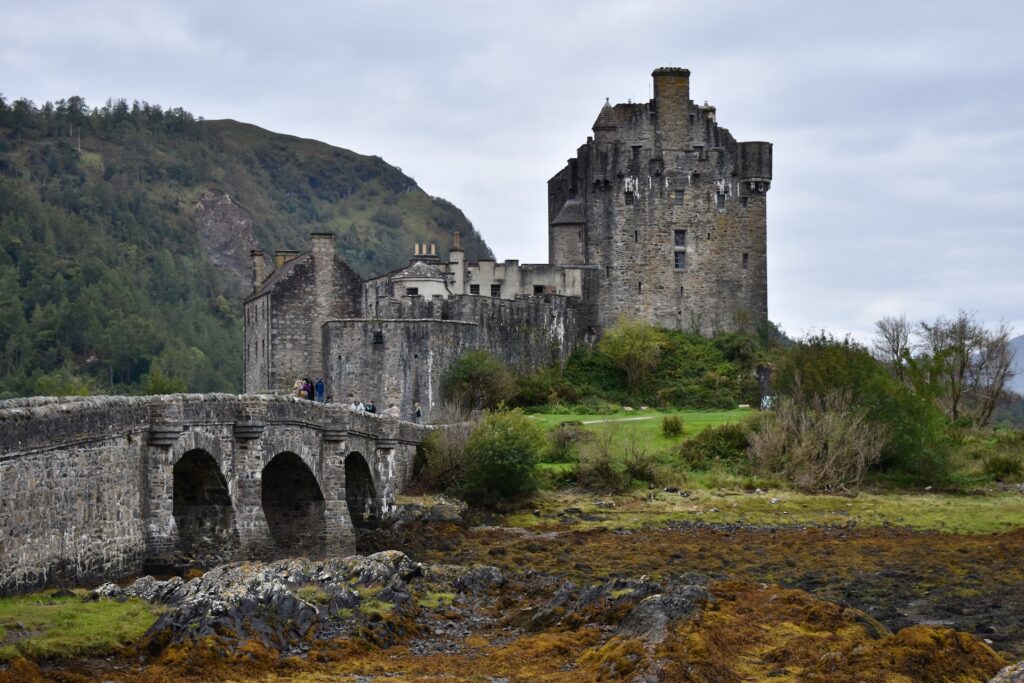
I’ll tell you everything I saw, what I felt, what’s worth it and what’s not — and at the end I’ll leave you my “balance” on whether Scotland would be a good country to live in, according to the things I always observe when I travel.
My route:
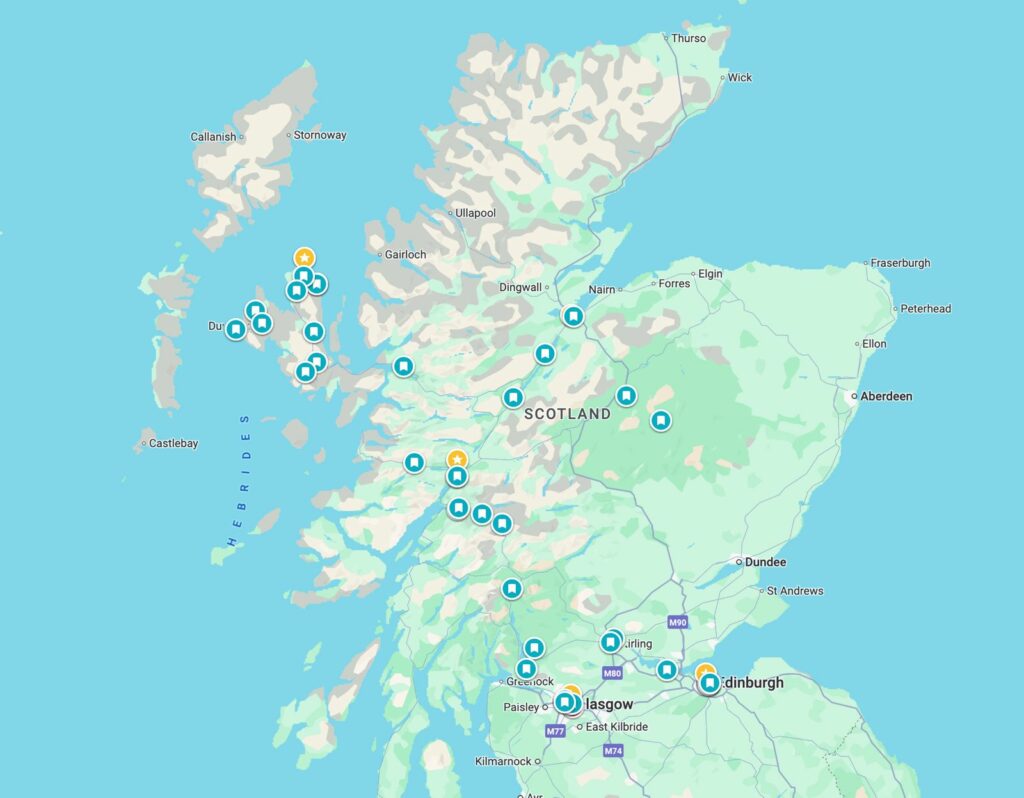
- Edimburgh
- Royal Mile
- Edinburgh Castle
- Victoria Street
- Grassmarket
- Arthur’s Seat
- National Museum of Scotland
- From Edimburgh to Inverness
- Stirling Castle
- Loch an Eilein
- From Inverness to Skye
- Urquhart Castle
- Fort Augustus
- Loch Ness
- Eilean Donan Castle
- Skye
- The Quiraing
- The Storr
- Fairy Pools
- Mealt Falls & Kilt Rock
- Neist Point Lighthouse
- Dunvegan Castle & Gardens
- Coral Beach
- The Fairy Glen
- Sligachan Old Bridge
- Fort William
- Glenfinnan Viaduct
- Ben Nevis
- Glencoe Loch Lomond
- Glencoe Lochan Trail
- Glencoe Viewpoint
- Rannoch Moor Viewpoint
- Loch Lomond
- Falls of Falloch
- Glasgow
- Merchant City
- Kelvingrove Museum
- University of Glasgow
- Clyde River
- Glasgow Cathedral
Arrival in Edinburgh: Silence, architecture and first impressions
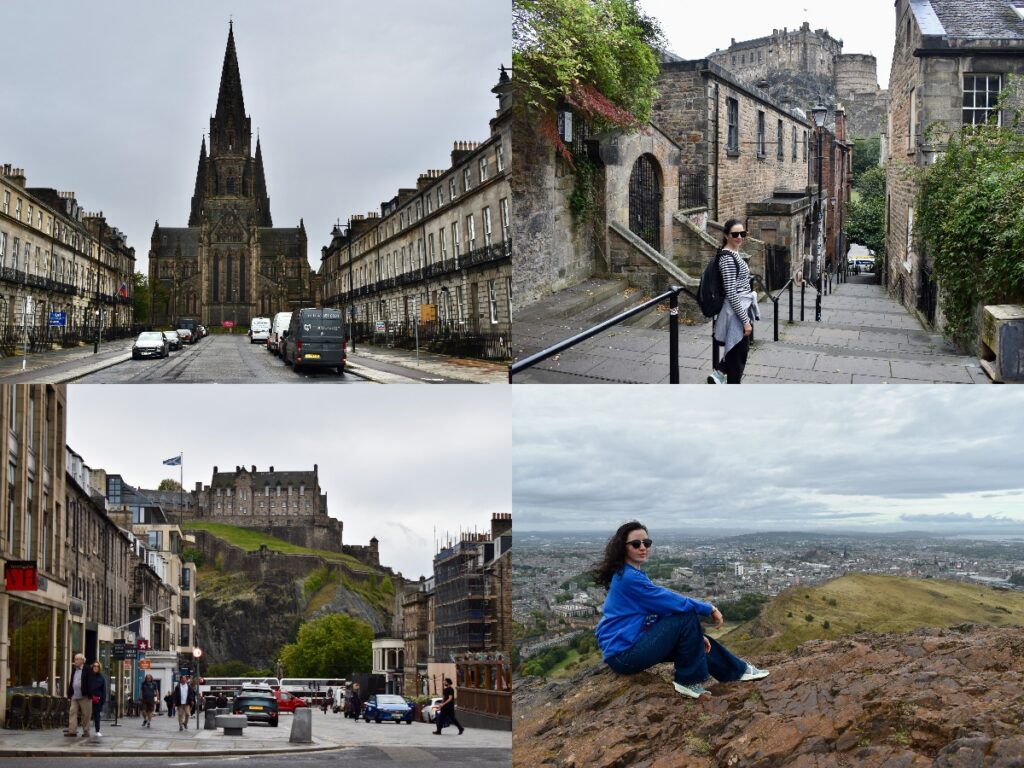
When we arrived in Edinburgh on the 19th (midday) and then spent the full 20th there, the first thing that struck me was the almost total silence. There were no motorbikes, the cars on the streets were almost all electric or low-emission, and the low-emission zones made the city feel futuristic.
In Amsterdam, where there are far fewer cars due to the bicycle culture, you can still hear a lot more noise.
Walking at night to go out for dinner was a dream: total silence.
The first impression was also one of cleanliness, especially if I compare it with Porto. But on the second day, I noticed the other side: trash and vomit on the sidewalks, the result of the British drinking culture. Even so, it remains one of the cleanest and quietest cities I’ve ever visited.
In terms of urban planning, I loved the homogeneous architecture, with no “visual noise.”
As in England, the museums are free, which is a positive point for the country.
We climbed Arthur’s Seat, but if you’re short on time, I wouldn’t recommend it: you basically climb a rock with no trees or anything special.
Another curious detail: in supermarkets I found almost no vegan options, although there are plenty of vegan restaurants. Exactly the opposite of what I found in Amsterdam.
From Edinburgh to Inverness: Castles from afar and the first contact with nature
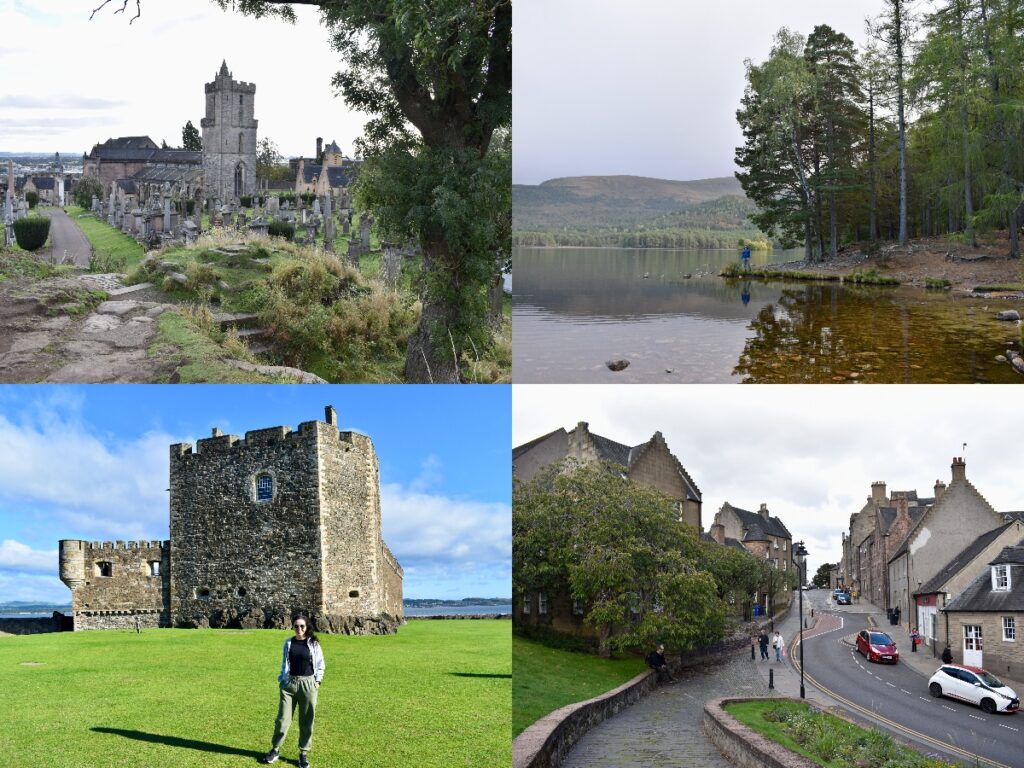
On the 21st we set off towards Inverness in a rental car. We passed by Stirling Castle but didn’t go in: the prices were outrageous (entry + very expensive parking), and in many cases you couldn’t even see the castle from outside without paying. It reminded me a lot of Iceland: that feeling that everything is organized to squeeze money out of tourists, even on hiking trails where they charged at least £4 just to park.
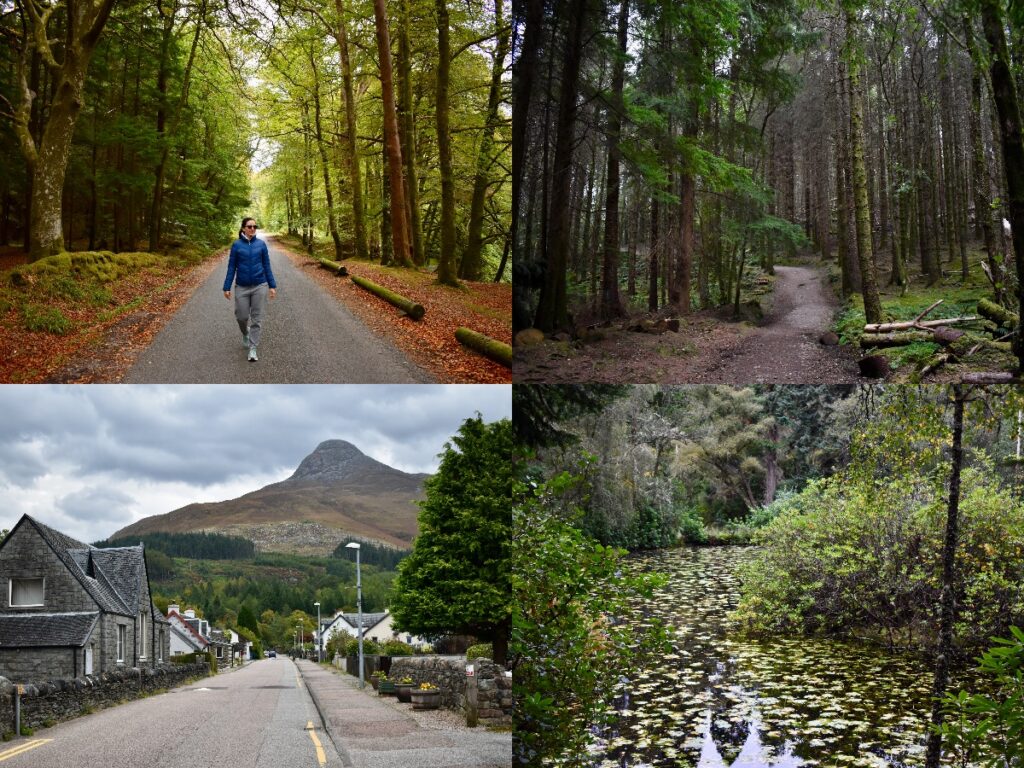
The reward came at Loch an Eilein. We did the trail around the lake, and it was magical: tall trees, beautiful autumn colors. That was when we felt we were finally seeing “the Scotland we came to find.”
From Inverness to Skye
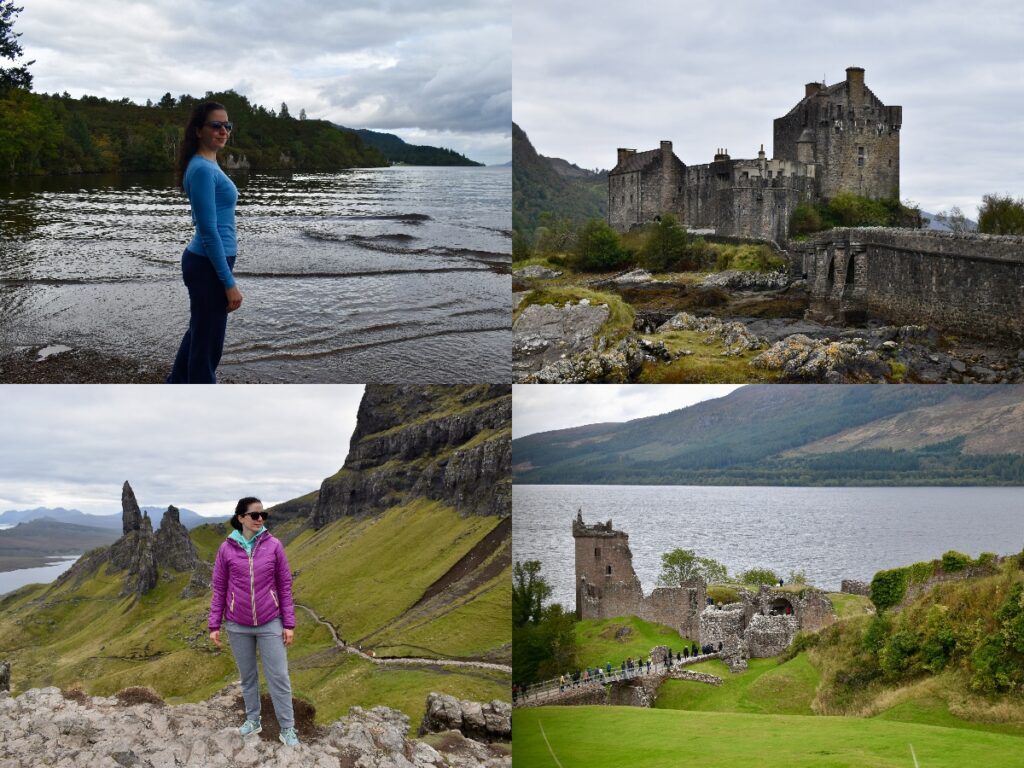
On the way we visited Urquhart Castle (almost impossible to see from outside without paying) and the famous Loch Ness. Pretty, yes, but nothing that moved me.
Arriving on the Isle of Skye was a bit bittersweet. It’s the most tourist-recommended island, the one everyone tells you to visit, but for me it wasn’t amazing. I enjoy dense, green forests with tall trees, and Skye is the complete opposite: bare landscapes, low vegetation, lots of wind.
We did hikes like The Quiraing and The Storr, which were nice, but without the level of impact I’ve experienced on trails in the Azores (Terceira, São Miguel), New Hampshire, or Peneda Gerês.
Some attractions didn’t convince me:
- Fairy Pools: I thought it was a rip-off. It’s basically a river with small pools, and parking cost £8 — the most expensive of the trip. Luckily, I found a free parking lot further up where the campervans park.
- Mealt Falls & Kilt Rock: just a small waterfall falling from a cliff.
- Neist Point Lighthouse: the place is nice, but nothing special.
- The Fairy Glen: it’s pretty, but also nothing special.
Ben Nevis
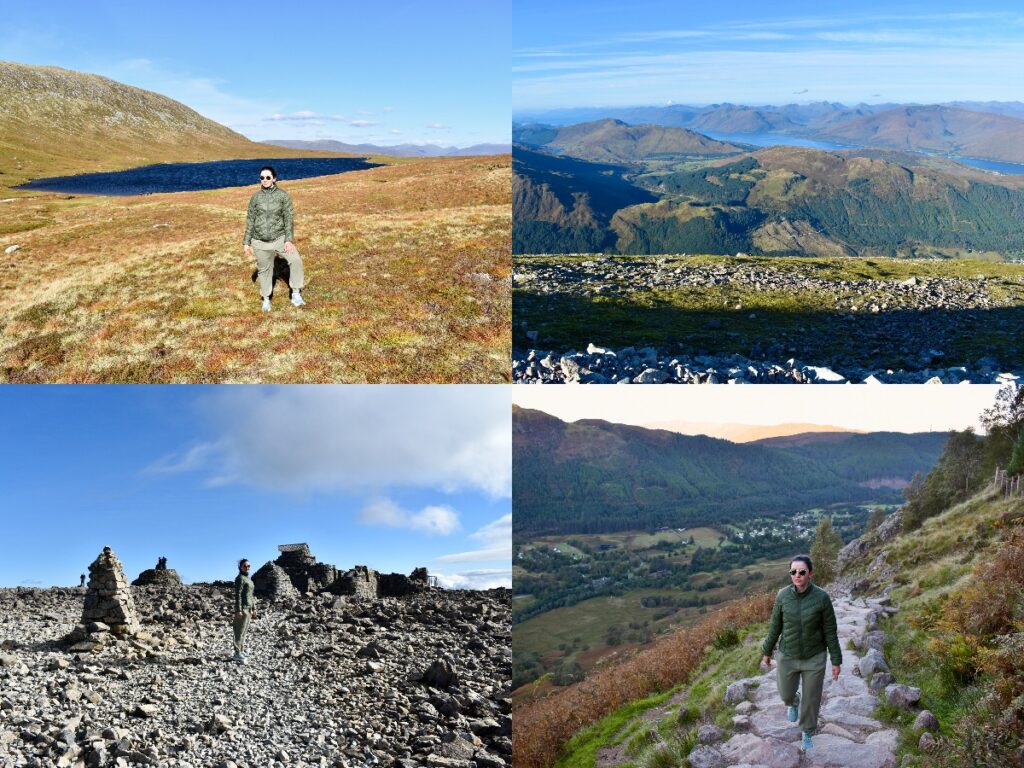
During our stay in Fort William, we discovered that everything revolved around Ben Nevis, the highest peak in the United Kingdom, standing at an impressive 1,345 meters high.
Although we had initially planned to do only a few short hiking routes around the area, we decided to change our plans for Ben Nevis instead.
We knew that Ben Nevis had a reputation for being tough, but that day we arrived in Fort William to splendid sunshine, even heat, without jackets, thinking it wouldn’t be that difficult. We didn’t have any technical clothing, just the basics for hiking, trusting that the weather would be kind.
According to what we found on the Internet, the ascent and descent together total between 16 and 17 km, and many guides estimate around 7 or 8 hours to complete the route, but we did it in 6 hours, which made us feel quite proud.
Half of the route is a constant stone slope — sections with natural steps, loose rocks, uneven paths — which makes every step heavy, especially with the wind. If the climb was already demanding, at the summit the wind turned into a brutal enemy: a biting cold that made our hands red and swollen; we barely managed to take a quick photo before starting the descent.
On the way down, the cold became even more intense — the accumulated sweat, the icy wind, the tired body — and by the time we reached the car, we were frozen. It was undoubtedly a very tough hike, one of those that reward you not only for reaching the summit but for the entire experience itself.
Glencoe, Loch Lomond and the most beautiful part of the trip
After Skye, we continued towards Fort William and from there to Glencoe. The Glencoe Lochan Trail was one of the most beautiful experiences: a trail around a small, peaceful lake. Together with Loch an Eilein, it was what I liked the most from the entire trip.
At Loch Lomond we had planned a hike to see the lake from above, but the rain ruined it. Instead, we visited the Falls of Falloch, a pretty and easily accessible waterfall (get out of the car, take the photo, and that’s it), although not particularly spectacular.
Glasgow: My big “No”
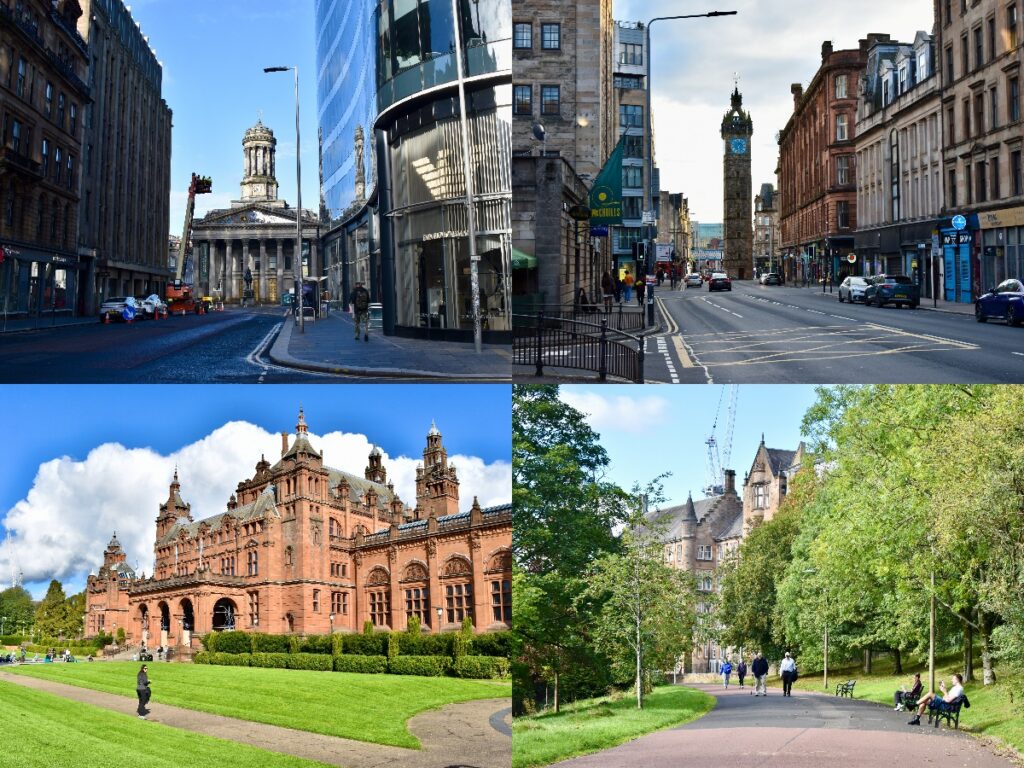
We arrived in Glasgow on a Saturday afternoon, and it was one of the most unpleasant experiences of the trip. Everything was full of drunk people, some barely able to walk. On one corner we saw a guy bleeding from his face, with the police trying to help him after he’d been beaten. On another street, people were running and shouting while chasing someone.
The bars had music blasting, constant yelling, and at night, we heard people breaking bottles. It was a creepy atmosphere.
The next day didn’t improve much: bars just as loud, even during the week, vomit on the sidewalks, and dirt everywhere.
As for tourism, there isn’t much to see. I’d recommend, at most, half a day to visit a couple of spots, but without staying overnight in the city. Glasgow is uncomfortable, and I don’t recommend it as a destination.
The Scotland of fairies, witches and enchanted legends
Scotland is a country where landscape and legend are completely intertwined. It’s not just that there are places with “Fairy” in their names; it’s that Scottish folk tradition truly believes in the presence of magical beings in nature.
In the Highlands and especially on the islands (like Skye or Lewis), the figure of the fairy is very present. But beware: Scottish fairies aren’t always sweet or angelic like in modern children’s stories. In Celtic tradition, fairies (the fair folk or the good people, as they were called so as not to offend them) were spirits of nature that could be benevolent, mischievous, or even dangerous if disturbed.
That’s why many places are called Fairy something: they’re spots where, according to popular belief, fairies appear, dance, or dwell. Some examples:
- Fairy Pools (Isle of Skye): it was said that the crystal waters were where the fairies came to bathe under the moon.
- Fairy Glen (Isle of Skye): this rolling landscape with small hills and circular formations was associated with the “fairy rings,” where they danced invisibly at night.
- Fairy Bridge (Isle of Skye): an old legend says that a fairy princess said goodbye to her human husband here, leaving behind an enchanted veil.
The stories about fairies are a mix of warnings and poetry: they speak of respect for nature, of not cutting certain trees (fairy trees, like rowans or hawthorns), and of not building where they “live,” as that brings bad luck.
In addition to fairies, Scotland has a long history of beliefs in witches, curses and spirits. In the 16th and 17th centuries there was strong persecution of women accused of witchcraft (it’s estimated that between 3,000 and 4,000 were executed). Many of today’s haunted stories come from that era.
Edinburgh, for example, is full of legends:
- The Grassmarket was one of the places where alleged witches were executed.
- In the underground alleys, it was said that the souls of the condemned or plague victims remained trapped.
That’s why Scotland has that mystical and melancholic atmosphere: a mix of natural beauty, tragic history, and superstitions that still survive in the collective imagination.
Prices in Scotland
Tourist accommodations seemed extremely expensive to me. However, something that surprised me was that food in supermarkets was cheaper than in Portugal and I think also cheaper than in Spain. Gasoline was cheaper than in Portugal, though not cheaper than in Spain.
Another curious detail is that, looking at real estate agencies, property prices seemed even cheaper in terms of quality-price ratio than in Portugal. As for electricity costs —for example, heating in winter—, from what I researched seemed that it isn’t much more expensive than in Portugal, at least compared to our usual winter consumption.
Quality of the accommodations
Something that really surprised us during the trip was the quality of the accommodations and, in general, of civil construction in Scotland.
In a previous post, I already talked about our experience with the places we stayed in, out of five accommodations, only one was good.
What caught our attention the most was the poor quality of the renovations. It was truly shocking to see how badly everything was done: improvised fixes, low-quality materials, walls with no acoustic or thermal insulation whatsoever, windows that barely closed properly. It was incredible to think that, in 2025, many of these tourist accommodations still seemed stuck in the 1980s. That feeling of “constant patching” followed us in almost every place we stayed, and it really made us reflect on the contrast between the country’s natural beauty and how neglected its buildings can be.
I’m someone who always complains in Portugal about the poor quality of construction and how bad the builders are, but in Scotland it was even worse.
We were truly amazed to see how, in 2025, they were still using systems that seemed taken straight out of another era. In almost every accommodation, the sinks had separate taps — one for cold water and one for hot — instead of having the classic single-lever mixer tap that combines both. So, you would either burn yourself or freeze, because there was no way to get lukewarm water.
In the showers, on the other hand, they had installed some very strange devices to try to compensate for that, but the result was extremely low water pressure. Altogether, it felt like going back in time with this kind of detail that no longer exists in the rest of Europe.
Another thing that also surprised me was the poor installation of the floors. In Scotland they put carpet everywhere, for thermal reasons, but I find it hard to understand that, in this day and age, there isn’t an alternative like good parquet or a modern floor that offers the same thermal insulation but is hygienic. Carpet, in the end, is truly disgusting: in almost every place we went, it smelled like dirty carpet.
Eating Vegan in Scotland: hits and misses
- Black Rabbit (Edinburgh): my favorite. I went back several times. The Full English Breakfast and the vegan eggs benedict were spectacular.
- Wee Buddha (Edinburgh): Asian food with nothing special, cold service.
- Novapizza Vegan Italian (Edinburgh): terrible. Burnt pizzas, one-hour wait, bad service.
- The Wildcat (Fort William): amazing desserts, especially the cakes.
- Cucina (Balloch): one of the worst places I’ve ever eaten, a failed attempt at Italian.
- Mono (Glasgow): good food and generous portions, but music at full volume that ruined the experience.
- Suissi Vegan Kitchen (Glasgow): very good, I had a delicious ramen, although the dessert was small and a bit expensive.
My Balance: Scotland as a place to live?
You already know that when I travel, I always think about whether that country would be a good place to live. And I evaluate it based on my criteria: public health, prostitution, monarchy, and gender equality.
Public Health
Scotland has NHS Scotland, part of the British healthcare system. Basic care is free (GPs, hospitals, emergencies) and there are no copays for most services. Prescription medicines are free. It’s not mandatory to have private insurance, although some use it to avoid waiting lists. In rural areas there are access challenges, but overall, it’s a strong public system.
Prostitution
Currently, selling sexual services is not illegal, but certain public behaviors are. In 2025 a bill was introduced to criminalize the purchase of sex and provide support to those who wish to leave prostitution. In other words, Scotland is moving toward a Nordic/abolitionist model, but hasn’t fully implemented it yet.
Monarchy
Scotland is part of the United Kingdom and therefore has King Charles III as head of state. The monarchy is purely symbolic, with no political power, but it remains part of the institution and is partly funded with public money.
Gender Equality
Scotland has strong policies (the Equally Safe plan against gender-based violence, fairly advanced pay equality with a gap of only 2.2% in full-time jobs). However, inequalities remain in positions of power, political representation, and discrimination against minorities and trans/non-binary people.
Something that really surprised me about Scotland is that there are no tolls. Unlike in many other European countries —such as Portugal, where tolls are extremely expensive and appear every few kilometers— here the roads are public, managed directly by the state. This means there are no private companies charging for their use, and traveling around the country is much more accessible and fairer. It’s a clear example of how infrastructure can be well maintained without turning it into a business.
Scotland left me with contrasts. On one hand, beautiful nature, peaceful landscapes, cities like Edinburgh that are examples of electric mobility and homogeneous architecture. On the other, overpriced tourism, overrated attractions, and a Glasgow that I found unbearable.
Would I live there? Maybe yes — especially somewhere quiet, surrounded by nature, with access to strong public healthcare and a country advancing in gender equality. But the monarchy and the drinking culture make me hesitate.
Travel Expenses for Two People
Flights: €433
Accommodation: €2,234
Car rental: €208
Transport (bus / parking / gas): €153
Restaurants: €522
Supermarkets: €96
Total: €3,646
Here are the links to my YouTube channel: