
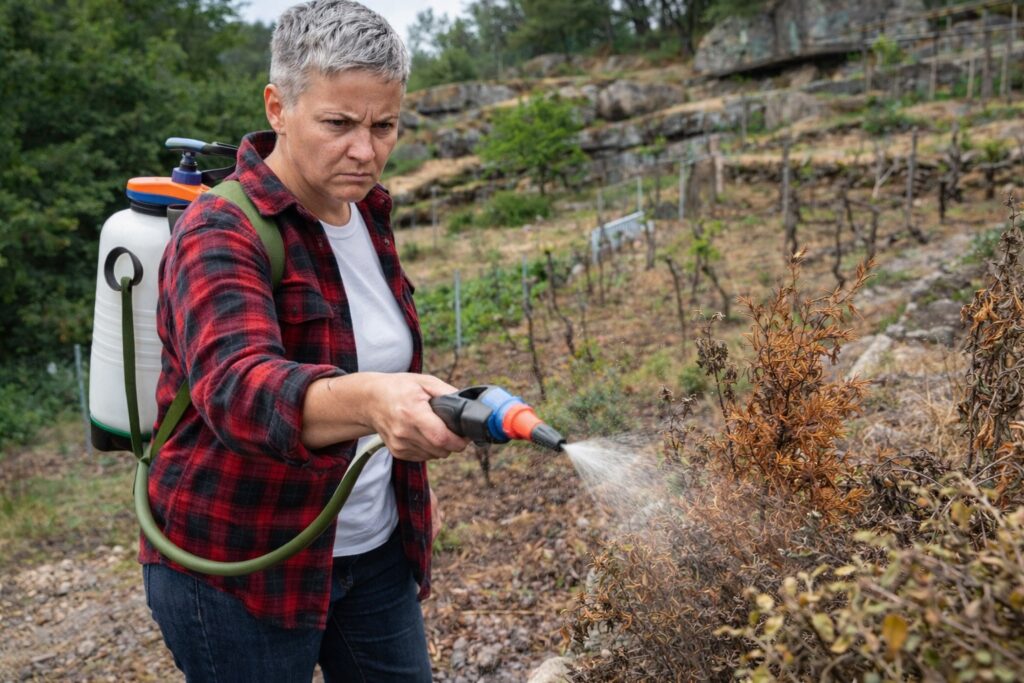
At the end of March 2026, we began a new stage in our properties located in a small village in Galicia. Between the 28th and 29th, we carried out cleaning work and planted cypresses, rose bushes, and other species.
When we left, everything was in perfect condition.
My neighbour oversaw watering, and during the week of April 6th, the first signs that something was wrong began to appear. The plants started to dry out despite being properly cared for. It was not a progressive deterioration. It was fast, irregular, and abnormal.
When we returned on the weekend of April 11th and 12th, the situation was evident. The newly planted cypresses had dried uniformly within days. The rose bushes were completely dead. In different areas, the vegetation showed clear signs of damage: burnt leaves, deteriorated stems, and total loss of vitality.
But what was most revealing was not only the damage, but its pattern.
The plants located in areas exposed to the road and the boundaries of my property appeared dry or “burnt.” However, those protected by walls or located in interior areas remained intact. This same behavior was repeated across my different plots.
In the vineyard area, the strips closest to the road showed completely dry vegetation, while just a few meters away the plants remained green. In another plot with a small stone structure, five cypresses appeared completely deteriorated. Even in neighboring lands, some of them abandoned, similar drying patterns were observed.
The documented images clearly reflect this phenomenon: defined lines of affected vegetation, damage concentrated along accessible edges, and a clear contrast with non-exposed areas.
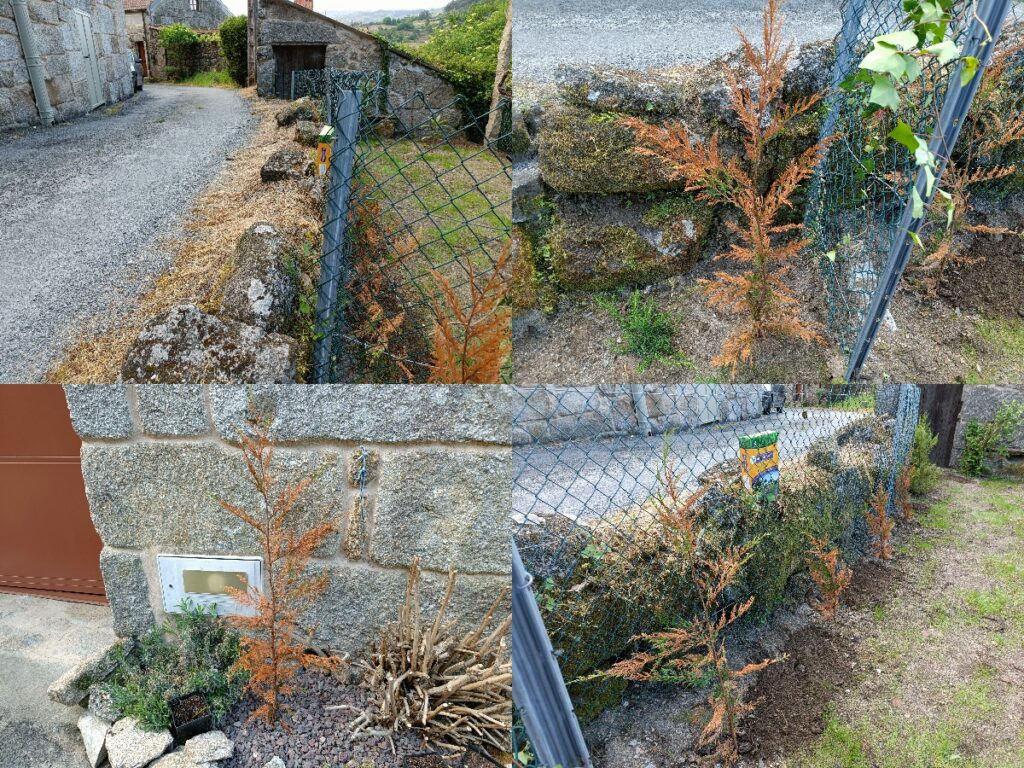
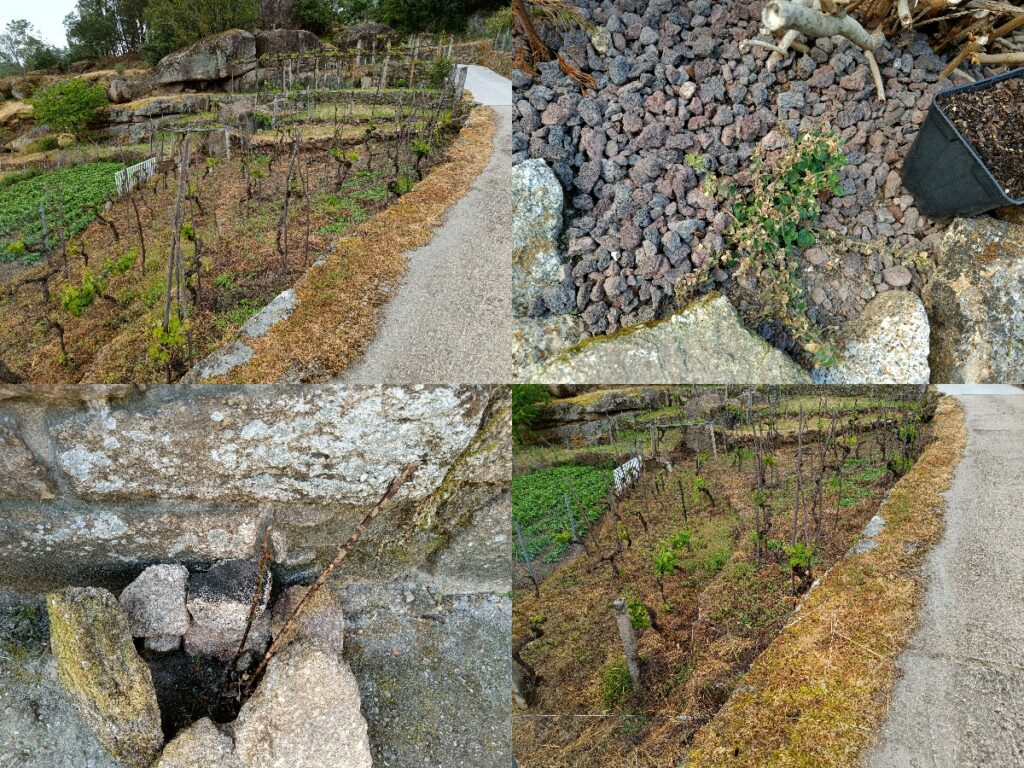
It was not a problem of irrigation or weather conditions. During those days there was rainfall and the plants had been cared for. Everything pointed to an external cause, to the fact that someone had killed our plants with herbicide.
That same April 11th, we planted two new cypresses next to the damaged ones, with the intention of checking whether the problem persisted. As of today, those specimens remain in good condition. This fact reinforces a clear conclusion: what happened does not respond to natural causes.
As we analyzed the situation, we detected something even more concerning. The damage was not limited to our properties. It also extended to two nearby abandoned plots —whose owners had passed away— where the vegetation showed the same drying pattern.
All of this suggests a repeated application of herbicide in rural areas, specifically in different zones accessible from the public road.
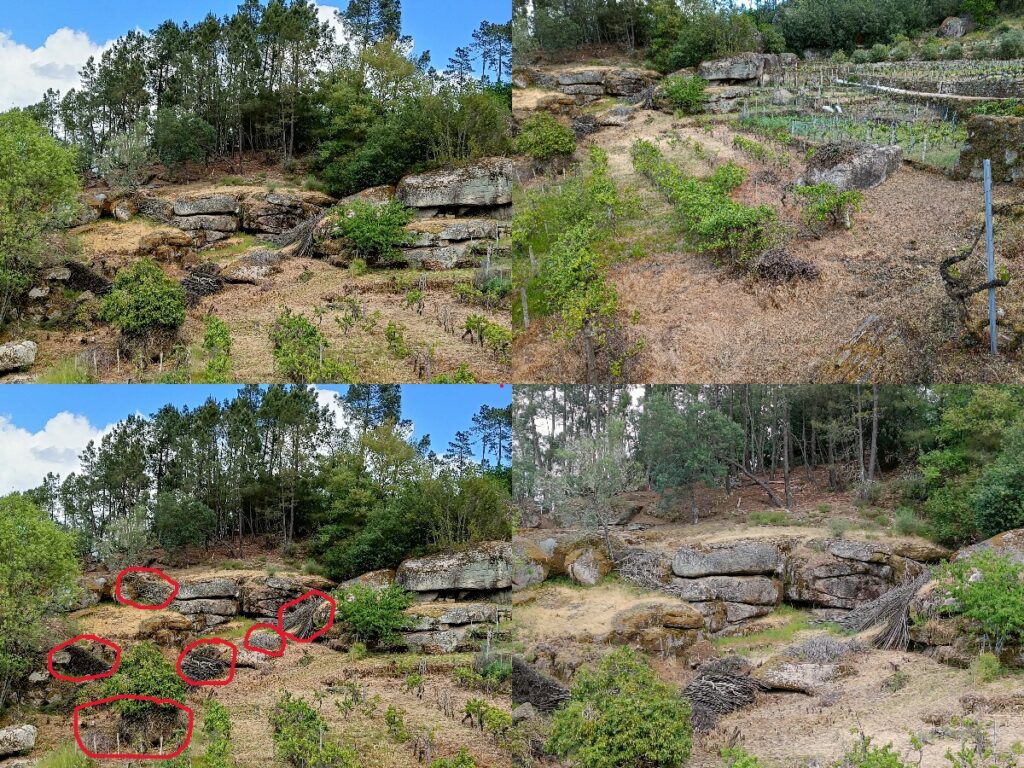
Given these facts, between April 14th, 15th, and 16th, 2026, we filed formal complaints with the Guardia Civil, SEPRONA, the Cenlle City Council, and the Xunta de Galicia, in addition to sending a communication to the Provincial Prosecutor’s Office of Ourense.
The complaints include a chronology of the events, identification of the affected plots, and extensive photographic evidence. A technical soil inspection has also been requested to determine the possible presence of chemical substances.
Because what happened is not a simple isolated damage.
The improper use of herbicides in rural environments can affect crops, contaminate the soil, damage ecosystems, and pose a risk to animals and people. In areas where life depends directly on the environment, these practices have consequences that go far beyond material loss.
Additionally, there is a factor that cannot be ignored: the context.
This is a very small village, where few people live together and where previous tensions already existed. There is no direct evidence that allows identifying a responsible person. But when the environment is so limited, uncertainty stops being abstract and becomes a real concern.
Faced with this situation, we have decided we never imagined would be necessary in a rural setting: installing surveillance systems on the property as a preventive measure.
On the weekend of April 17, we returned to our house in Galicia and saw that the last two cypress trees we had planted were still standing.
On Monday, April 20, the Civil Guard called us to confirm that they would investigate our complaint and asked if we had any disputes with any neighbors. We informed them that there was a neighbour who had been harassing the former owner and that now that we had bought the house, the harassment had shifted to us.
They told us they would begin the necessary proceedings.
We are still waiting for the authorities to act. For what happened to be investigated. For the facts to be clarified, if possible, and for it to be prevented from happening again.
It is often thought that problems in a rural home have to do with structure, humidity, or renovations. But sometimes, the real problem is not in the house or the land. It is in the human environment. And that, unlike any construction, cannot always be repaired.
More articles on searching for and buying our second home: