
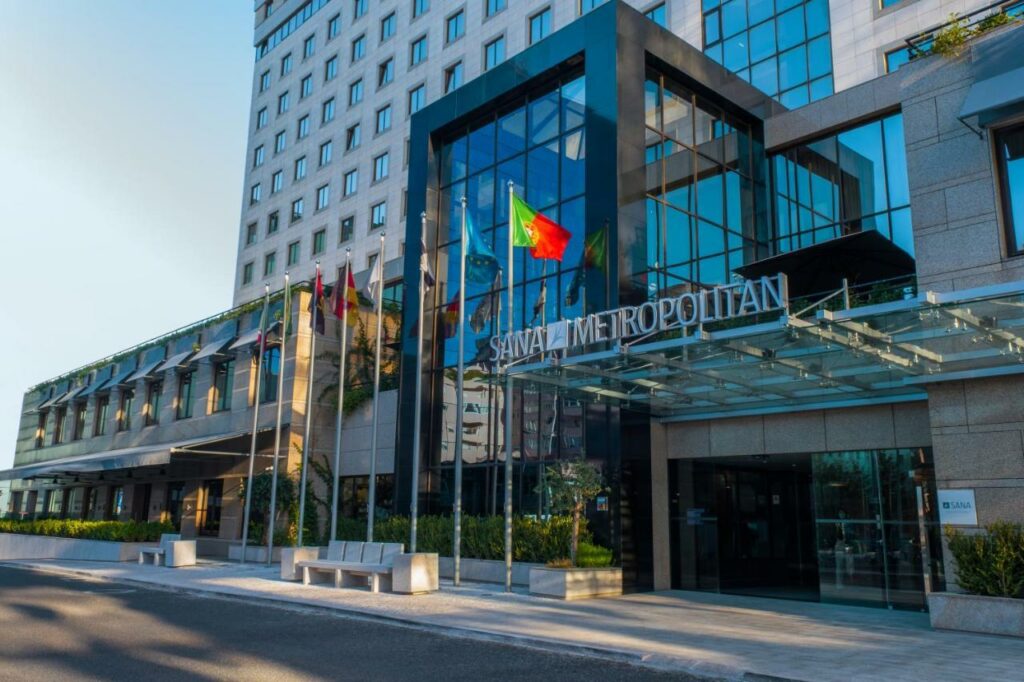
In October 2025, the company where Diego works organized its long-awaited off-site, this time in Lisbon. Employees came from all over the world to spend a few days of work, connection, and coexistence outside the routine. Everything pointed to it being an enriching international experience, until the first big mistake appeared: the choice of the hotel.
The chosen place was the Hotel SANA in Lisbon, and from the beginning there were warning signs. Logically, in an event of this magnitude, whoever organizes the logistics should get proper advice: ask someone local —like Diego, who lives in Portugal—, check recent reviews or at least verify the location on the map before making the reservation. But none of that was done.
The result: a hotel located in one of the worst areas of Lisbon. We already knew the area, because on a previous visit we had stayed in an apartment very close to there and the experience was not good. It is an ugly, neglected area, with dirty streets and an unsafe atmosphere, where, in addition, planes pass every few minutes making a constant and unbearable noise. So, when Diego heard the name of the hotel, he already knew the location was going to be a disaster.
This hotel is far from everything, extremely far from the center. For a company off-site, that is a serious failure. Ideally, attendees should be able to have some life beyond the scheduled activities: go out to explore the city, walk around, have dinner in a local place or simply enjoy the surroundings. But in this case, none of that was possible. Lisbon was reduced to the walls of the hotel.
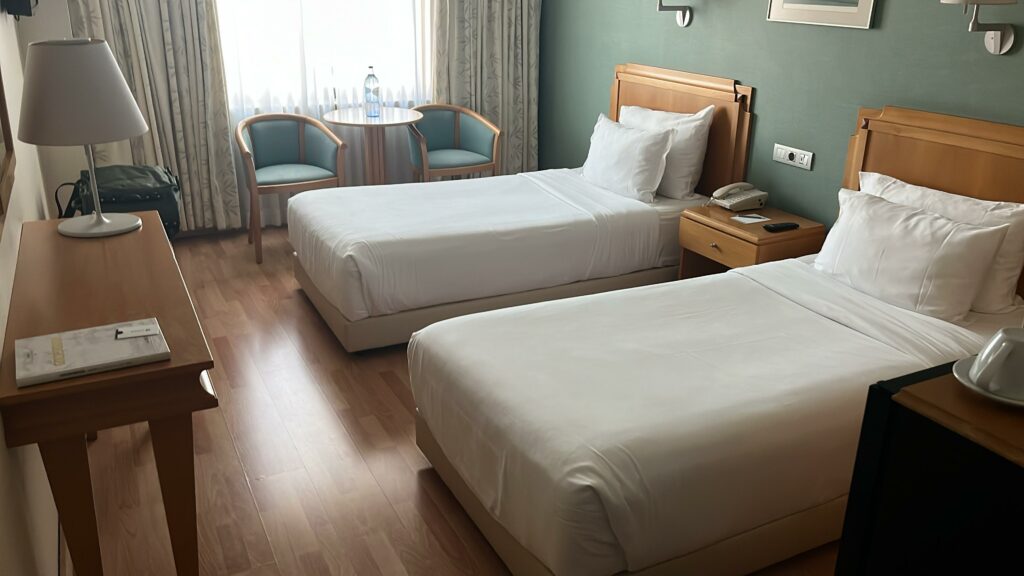
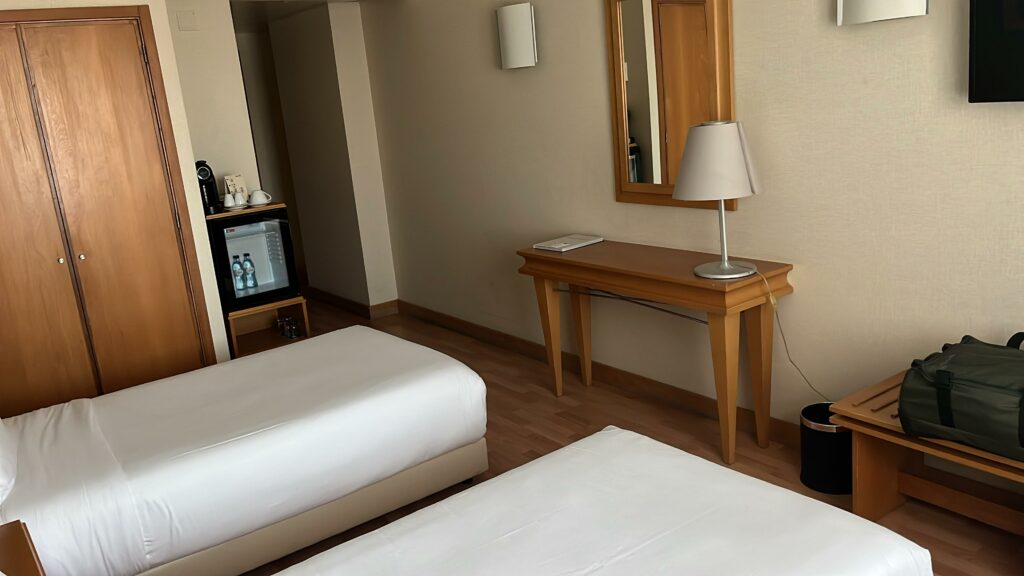
A group of 25 people and zero attention to detail
In total, there were 25 people from the same company staying there. And when a hotel receives such a large group, especially from an international company, one expects a certain level of care, personalized attention, and detail. In the end, it’s not a couple or a family: it’s 25 corporate guests, which represents an important client anywhere in the world.
But none of that was noticed. The hotel did not offer any special attention, not even something as basic as verifying that everything was correct with the reservations, the rooms, or the contracted services.
The failure in the organization (and in the hotel itself)
There were also mistakes from the Human Resources people who managed the off-site. Not only did they choose a hotel with a terrible location —far from everything and with an unattractive environment—, but they also didn’t worry about the group’s dietary needs.
Diego, for example, informed from the beginning that he is vegan, and assumed, with all the logic in the world, that the Human Resources team would coordinate with the hotel so that the breakfast —included in the reservation— would have appropriate options. But no: there was absolutely nothing vegan.
Not even a plant-based milk. Not one gluten-free option. Not a single product suitable for allergies. Nothing.
The most surprising thing of all is that we are talking about a hotel that presents itself as “five stars.” In 2025, an establishment with that category that does not include basic options for vegan, celiac, or allergy diets not only looks bad, but shows itself to be totally disconnected from the current reality of tourism.
How can a hotel of this category continue operating without understanding the dietary diversity of its guests? In an era when almost all mid-range hotels offer alternatives, the SANA Lisboa seems to have remained stuck in the past.
Beyond the mediocrity of the establishment in this sense, what was truly unacceptable was the attitude of the Human Resources department, which did not have the subtlety or humanity to care about something as basic as what their own team was going to eat.
When you organize an international off-site, you know you are bringing together people with different realities and lifestyles: vegan, celiac, allergic, or simply with different habits. You don’t need to be an event expert to understand that, before confirming a hotel, you must ensure that all people can eat properly.
But no. In this case, nobody thought about it. Nobody asked. Nobody bothered to confirm whether the breakfast included in the hotel offered varied options.
A hotel that is not up to its five stars
The Hotel SANA Metropolitan Lisboa is not, by any means, a five-star hotel, no matter how much it advertises itself as such.
To begin with, the noise was constant. Planes passed every five minutes. The soundproofing was non-existent, so absolutely everything could be heard. Resting was an impossible mission.
Even for those who have no dietary restrictions, the breakfast was very basic, with no variety or quality. In a hotel that boasts five stars, one expects fresh products, varied options, natural juices, something that shows care.
The fitness center was tiny, with no space and so little equipment that it was practically unusable. The Wi-Fi was the only thing that worked normally.
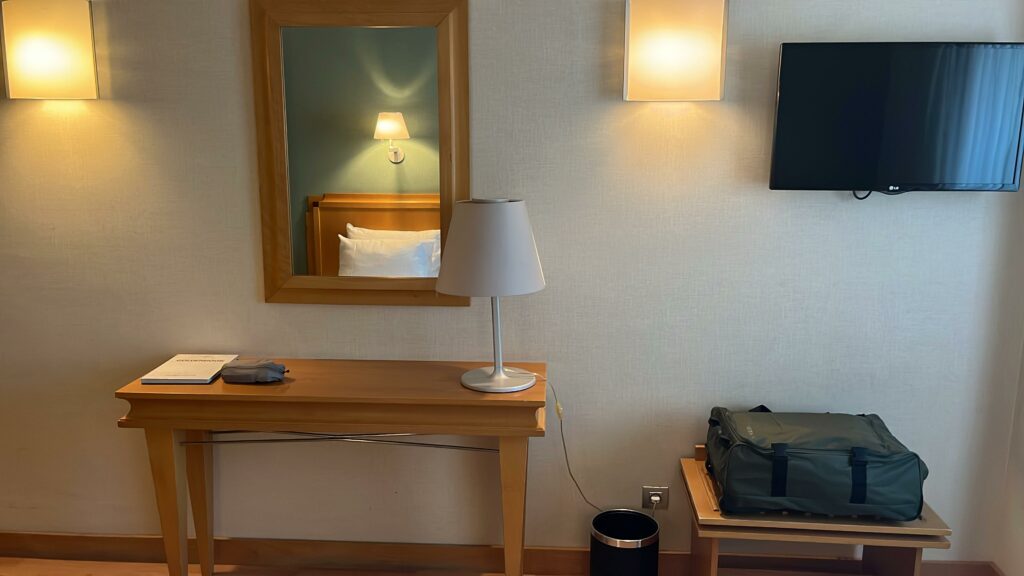
The television was old and didn’t even have basic apps like Netflix. In 2025, that is unacceptable for a hotel that pretends to be luxurious.
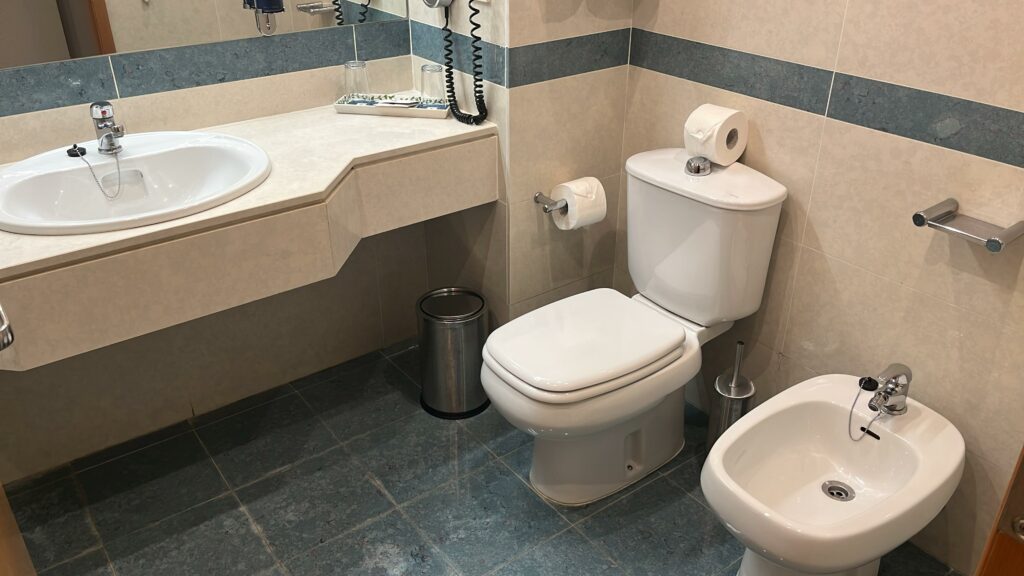
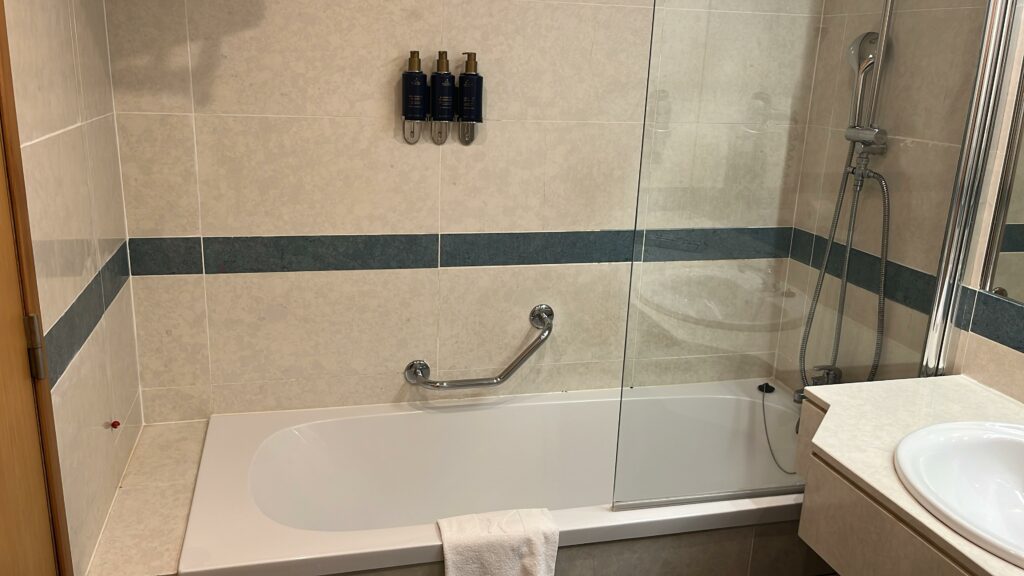
The bathroom was outdated, with a bathtub instead of a modern shower, and a showerhead placed so low that a tall person ran the risk of hitting their head.
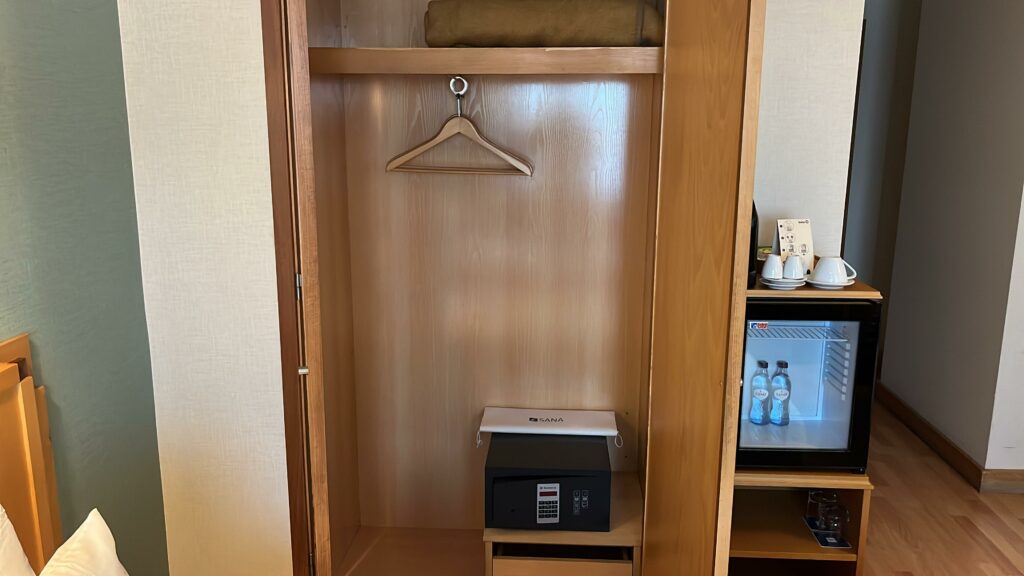
The towels were of poor quality, comparable to the cheapest ones you can buy at Ikea, and the mattress was old and saggy, which made it even harder to rest well.
The cleaning was merely acceptable. Yes, there was daily service, but without the level of detail one expects from a five-star hotel. The meeting center, which supposedly was the reason Human Resources chose this hotel, also turned out to be very basic.
In summary, the Hotel SANA Lisboa is a mediocre hotel that sells itself as five stars. It is not —not for its location, nor its facilities, nor its attention, nor its service. In the context of an international corporate event, this choice was one mistake after another.